Wildlife and animal intruders
Squirrels in the loft: what to do and the law you must know
Grey squirrels nest in lofts and cause heavy daytime scratching, gnawed wood and wiring, and droppings. They are an invasive non-native species, and under UK law it is illegal to release or rehome a trapped grey squirrel alive: it must be humanely dispatched. Exclusion (sealing entry once they are out) is the safest lawful approach, and a professional can manage it correctly.
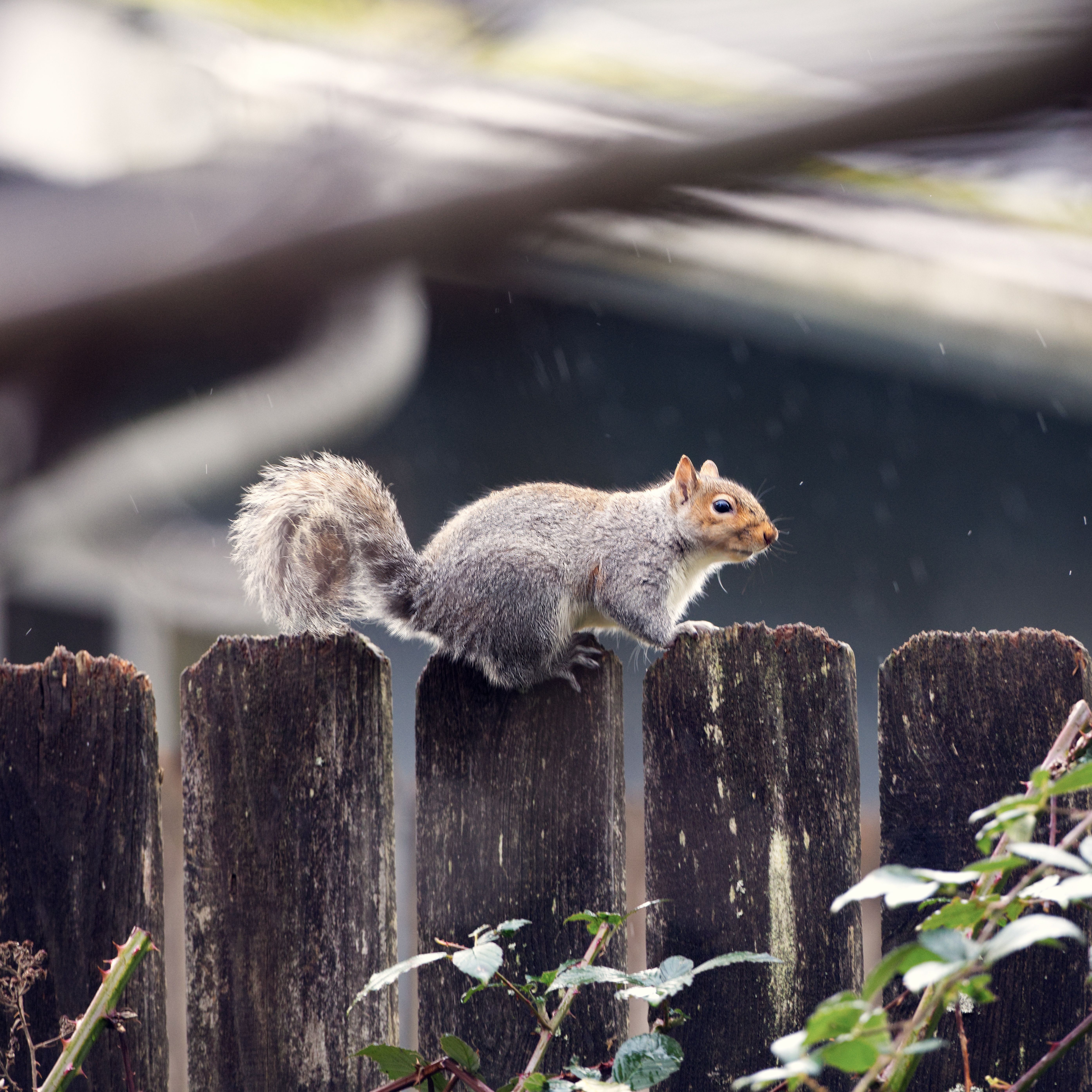
- Also known as
- grey squirrel (Sciurus carolinensis), tree rats (informal)
- Easily confused with
- rats in the loft (smaller, more nocturnal), birds in the eaves
- How serious
- Moderate to high: structural and fire risk, with strict legal rules
How to identify squirrels in the loft
Squirrels are most active in daylight, so loud scratching, scrabbling and rolling noises (they cache nuts) in the loft during the day, rather than at night, strongly suggest squirrels rather than rats.
Look for gnawed timber, joists, insulation and cables, shredded nesting material, larger droppings than a rat, and entry points around the roofline, soffits and where branches overhang the roof.
How serious is it?
Moderate to high: structural and fire risk, with strict legal rules
The main risks are structural and electrical: squirrels gnaw wood and wiring, which can damage the roof and create a fire risk, and their nesting fouls insulation.
There is also a legal dimension that makes this more than a nuisance. Because the grey squirrel is an invasive non-native species, releasing a trapped one alive is illegal, so the way you deal with them is constrained by law as well as practicality.
How to fix it yourself
- Confirm they are gone before sealing up, ideally in the daytime when squirrels are out foraging, so you do not trap an animal inside.
- Identify and seal entry points once they have left: repair gnawed soffits, fit mesh over gaps, and block routes along the roofline.
- Cut back tree branches that overhang or touch the roof, removing the access route.
- Do not attempt to trap and release a grey squirrel elsewhere: under UK law it is illegal to release or rehome a grey squirrel alive once caught, so live relocation is not an option.
- Given the legal restrictions and roof access involved, this is a problem many homeowners are better off handing to a professional.
When to call a professional
- Squirrels are active in the loft, there is gnawing near wiring, or you are unsure how to deal with them within the law.
- You need safe roof access, entry points sealed, or lawful control carried out correctly.
Who to call
- A British Pest Control Association (BPCA) member or specialist wildlife controller experienced with grey squirrels and the legal requirements.
- A roofer for repairing gnawed soffits and sealing entry points once the loft is clear.
Frequently asked questions
How do I know if it is squirrels or rats in my loft?
Squirrels are mainly active in daylight, so loud daytime scratching, scrabbling and rolling sounds point to squirrels, while rats are more nocturnal. Squirrels also leave larger droppings and heavier gnawing on timber. If the noise is at night and lighter, rats are more likely.
Is it legal to release a grey squirrel I have caught?
No. The grey squirrel is an invasive non-native species, and under UK law it is illegal to release or rehome a trapped grey squirrel alive. A caught grey squirrel must be humanely dispatched, not relocated. This is why many homeowners use a professional, and our what is legal page explains the rules.
How do I get squirrels out of my loft?
The lawful and practical approach is exclusion: confirm they have left (usually in daytime), then seal every entry point and cut back overhanging branches so they cannot return. Because of the roof access and the legal restrictions on grey squirrels, a specialist wildlife controller is often the safest choice.
Sources
Editor, HomesAndHedge
Oliver Mackman is the editor of HomesAndHedge and is accountable for its editorial standards and sourcing. He ensures every claim is backed by a named source such as the Property Care Association, the RHS, the NHS or gov.uk, and that the site is clear about when a job needs a qualified professional.
Last reviewed: 24 September 2026