Wildlife and animal intruders
Moles in the garden: the molehills and what you can do
Moles tunnel underground in search of earthworms, pushing up the molehills and surface ridges that disrupt lawns. They rarely damage plants directly, so the problem is mostly cosmetic. Control options range from deterrents to trapping by a professional mole catcher; trapping is regulated by animal welfare and spring-trap approval rules.
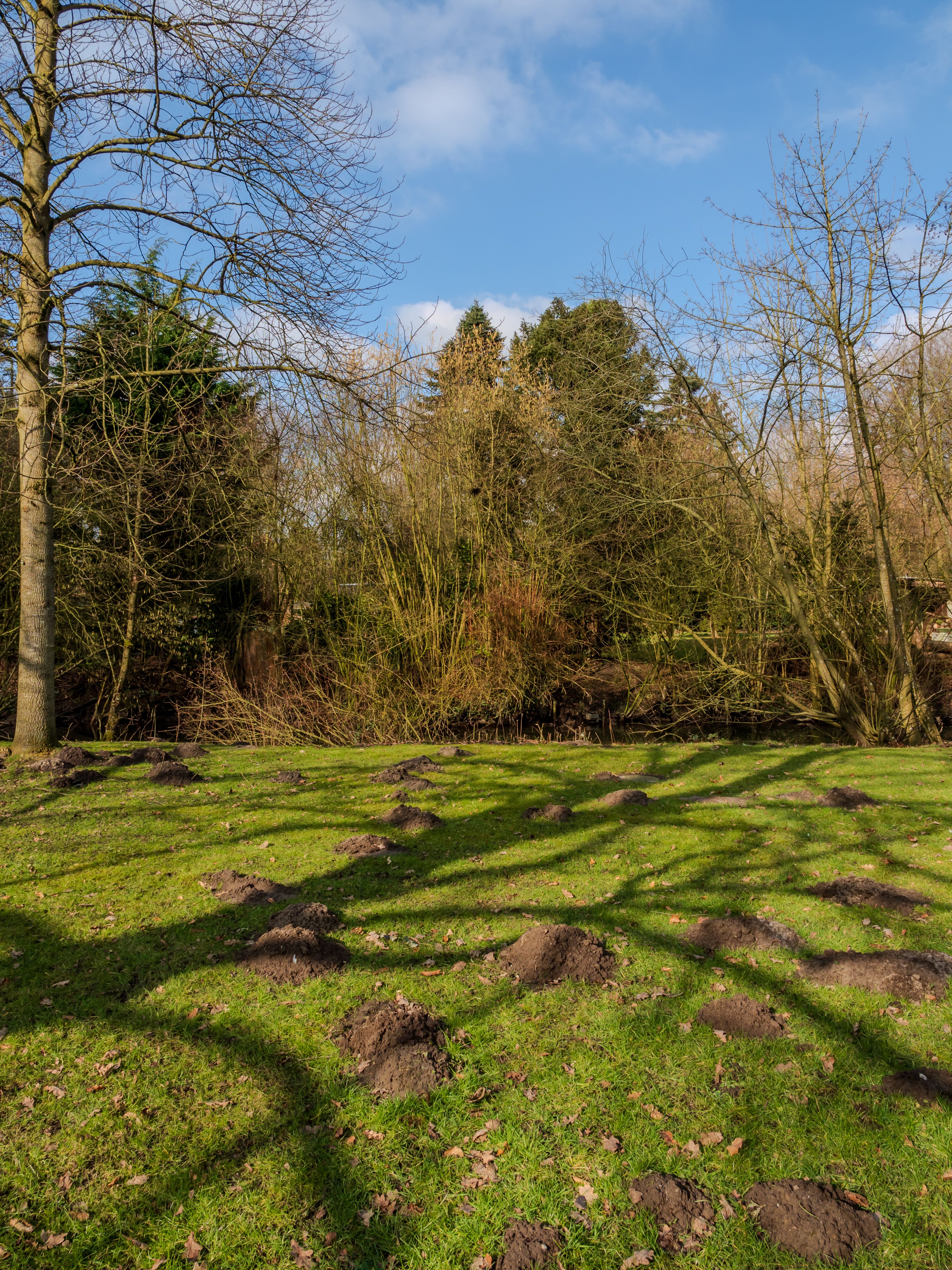
- Also known as
- European mole (Talpa europaea)
- Easily confused with
- voles (eat plants, leave different signs), rats burrowing
- How serious
- Low: mostly cosmetic, as moles eat worms, not plants
How to identify moles
The unmistakable sign is molehills, conical heaps of fine soil pushed up across a lawn or border, often in a rough line that traces the tunnel below.
You may also see raised surface ridges where shallow tunnels run, and patches of lawn that feel spongy underfoot. Moles themselves are rarely seen, as they live almost entirely underground.
How serious is it?
Low: mostly cosmetic, as moles eat worms, not plants
Moles are largely a cosmetic nuisance. They feed on earthworms and grubs rather than plant roots, so they do not usually eat or kill plants, though their tunnelling can disturb roots and the molehills spoil a lawn.
The main practical issues are the mess of molehills, the trip risk of collapsing tunnels, and soil getting into mower blades. For most gardens it is an appearance problem rather than a serious one.
How to fix it yourself
- Decide whether you need to act at all, as a few molehills in a large garden may be easier to tolerate and rake off than to fight.
- Try deterrents first: mole repellents, sonic spikes and disturbing the tunnels can encourage moles to move on, though results vary and are not guaranteed.
- Rake off molehills and firm down ridges to keep the lawn usable.
- Make the garden less attractive by reducing the worm-rich conditions only if practical, though this is hard to achieve without harming the soil.
- If you trap, you must follow animal welfare law and use only approved spring traps used correctly; many people prefer to hire a professional mole catcher for this.
When to call a professional
- Deterrents have failed and molehills are persistently spoiling a lawn or sports surface.
- You want trapping done lawfully and effectively, which a professional mole catcher is set up to do.
Who to call
- A professional mole catcher, often a local sole trader, experienced in lawful trapping.
- A lawn-care or garden firm for repairing and re-levelling a lawn after persistent mole activity.
Frequently asked questions
Do moles damage gardens?
Mostly cosmetically. Moles eat earthworms and grubs rather than plant roots, so they rarely kill plants. The problems are the molehills spoiling a lawn, surface ridges, the trip risk of collapsing tunnels, and soil disturbance. For many gardens it is an appearance issue rather than a serious one.
How do I get rid of moles humanely?
Start with deterrents such as repellents and sonic spikes, and disturb the tunnels, accepting that results vary. If you trap, the law requires you to follow animal welfare rules and use only approved spring traps correctly. Many people hire a professional mole catcher to do this lawfully and effectively.
Are mole traps legal?
Trapping moles is legal, but it is governed by animal welfare law and spring-trap approval rules that cover which traps may be used and how. Traps must be used correctly to avoid causing unnecessary suffering. Because of these rules, many homeowners use a professional mole catcher rather than trapping themselves.
Sources
Editor, HomesAndHedge
Oliver Mackman is the editor of HomesAndHedge and is accountable for its editorial standards and sourcing. He ensures every claim is backed by a named source such as the Property Care Association, the RHS, the NHS or gov.uk, and that the site is clear about when a job needs a qualified professional.
Last reviewed: 24 September 2026