Wildlife and animal intruders
Pigeons on the house: deterrents, mess and the law on nests
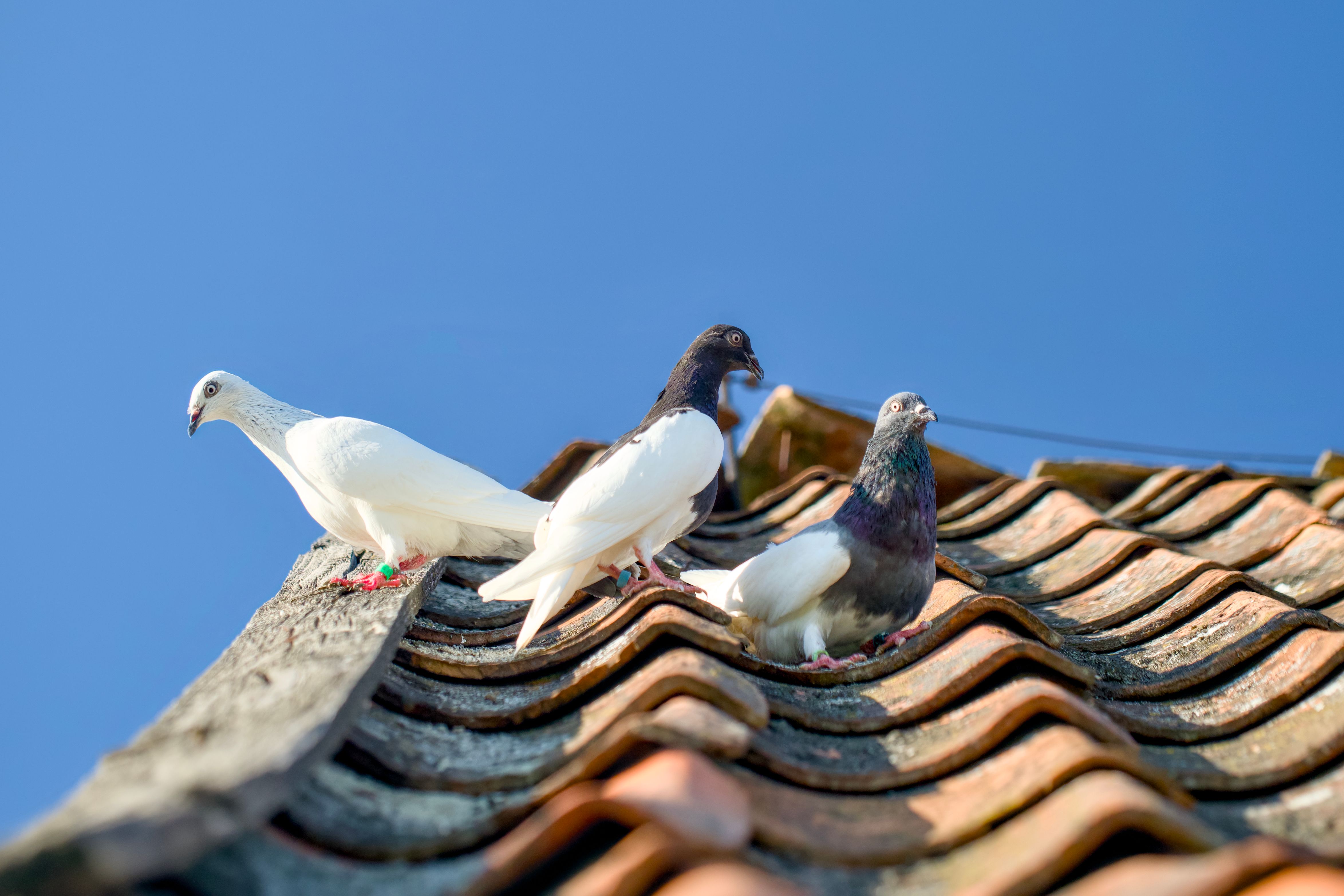
Feral pigeons roost and nest on ledges, roofs and in eaves, leaving acidic droppings that foul surfaces and can carry disease. Deterrents such as spikes, netting and wire are the usual, lawful answer. All wild birds are protected, so you must not harm them or disturb an active nest with eggs or chicks, which limits action during the nesting season.
- Also known as
- feral pigeon (Columba livia domestica), town pigeon
- Easily confused with
- wood pigeons (larger, garden birds), collared doves
- How serious
- Low to moderate: a hygiene and damage issue, rarely urgent
How to identify pigeons
Feral pigeons are the familiar grey town pigeons that gather on roofs, ledges, balconies and under solar panels, and in the eaves and lofts of buildings.
The clearest signs of a problem are accumulations of droppings beneath roosting spots, nesting material on ledges and in gutters, cooing and flapping noises, and feathers. Droppings staining a wall or blocking a gutter are common triggers.
How serious is it?
Low to moderate: a hygiene and damage issue, rarely urgent
Pigeon droppings are acidic and can damage stonework and paintwork over time, block gutters, and carry organisms that may affect health, so heavy fouling is a hygiene and maintenance issue.
The problem is rarely an emergency, but it can become persistent because pigeons are strongly tied to a roosting site, so deterrents need to be thorough. Cleaning large amounts of dried droppings should be done carefully because of the health risk from the dust.
How to fix it yourself
- Remove what attracts them: do not feed pigeons, secure bins and food waste, and clear spilled food.
- Fit physical deterrents on roosting spots: anti-roosting spikes, bird netting, tensioned wire, or sloped covers on ledges, so birds cannot land or nest.
- Block access to lofts and eaves by sealing gaps and fitting mesh, once you are sure no active nest is present.
- Clean droppings safely: dampen them first to reduce dust, wear gloves and a mask, and disinfect, rather than dry-brushing.
- Do not interfere with an active nest containing eggs or chicks, as wild birds and their nests are protected; wait until it is no longer in use.
When to call a professional
- There is heavy, persistent fouling, a large roost, or access at height is needed to fit deterrents.
- You are unsure whether an active nest is present, or need a thorough bird-proofing of the building.
Who to call
- A specialist bird-proofing or pest control firm (a BPCA member) for spikes, netting and proofing at height.
- A cleaning specialist for large-scale safe removal of droppings.
Frequently asked questions
How do I stop pigeons landing on my house?
Fit physical deterrents on the spots they use: anti-roosting spikes, bird netting, tensioned wire or sloped ledge covers, so they cannot land or nest. Stop feeding them and remove food sources. Seal access to lofts and eaves once you are sure no active nest is present.
Is it illegal to remove a pigeon nest?
All wild birds, their eggs and active nests are protected, so you must not disturb a nest while it contains eggs or chicks. You can fit deterrents and seal access to prevent nesting, and remove an old nest once it is no longer in use, but interfering with an active nest can be an offence.
Are pigeon droppings dangerous?
Large accumulations can be a hygiene concern and may carry organisms that affect health, and the acidic droppings damage stonework over time. Clean them safely by dampening first to limit dust, wearing gloves and a mask, and disinfecting, rather than dry-brushing dried droppings into the air.
Sources
Editor, HomesAndHedge
Oliver Mackman is the editor of HomesAndHedge and is accountable for its editorial standards and sourcing. He ensures every claim is backed by a named source such as the Property Care Association, the RHS, the NHS or gov.uk, and that the site is clear about when a job needs a qualified professional.
Last reviewed: 24 September 2026