Wildlife and animal intruders
Rats in the house or garden: signs, risks and how to get rid of them
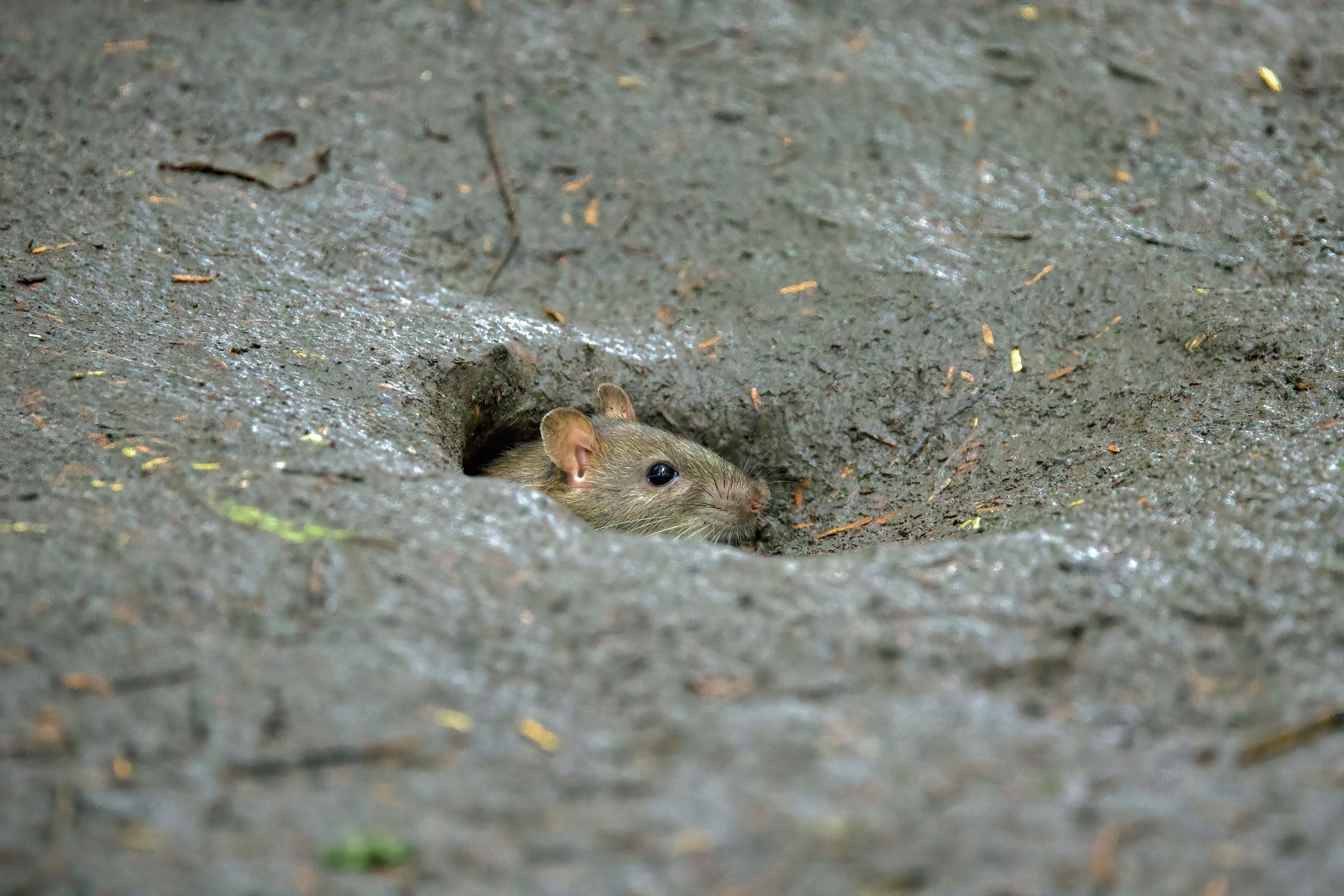
Rats are large rodents that enter homes and gardens for food and shelter, leaving dark droppings, gnaw marks, runs and scratching noises. They can carry disease and gnaw wiring, so an established infestation is best dealt with by removing food and harbourage, sealing entry points, and calling your council or a professional pest controller.
- Also known as
- brown rat (Rattus norvegicus), common rat, sewer rat
- Easily confused with
- mice (much smaller, finer droppings), squirrels in the loft
- How serious
- Moderate to high: a health and property risk once established indoors
How to identify rats
Brown rats are large, up to about 25cm in body length with a shorter tail, grey-brown fur and a heavy build. You are more likely to see the signs than the rat itself.
Signs include dark, capsule-shaped droppings around 1 to 2cm long, gnaw marks on wood, plastic and wiring, greasy smear marks along their runs, scratching or scrabbling noises in walls and lofts (often at night), and burrows in the garden near sheds, compost or decking.
How serious is it?
Moderate to high: a health and property risk once established indoors
Rats are a genuine concern rather than just a nuisance. They can carry diseases transmissible to people, contaminate food, and gnaw cables and pipes, which is both a fire and a flood risk.
A single sighting in the garden is common and not an emergency, but signs of rats living in the home (droppings indoors, noises in the loft, gnawed packaging) point to an infestation that should be dealt with promptly.
How to fix it yourself
- Remove the food supply: secure bins, clear fallen bird food and fruit, store pet food in sealed containers, and tidy compost.
- Remove harbourage: clear clutter and overgrowth near the house, and keep stored items off the ground.
- Seal entry points, as rats can pass through surprisingly small gaps: fit bristle strips, wire wool and sealant, and cover air bricks with fine mesh.
- Use snap traps placed against walls on their runs if you are confident doing so safely and humanely; follow label guidance carefully if using rodenticide, keeping it away from children, pets and wildlife.
- Contact your local council, as many provide rat control, sometimes free of charge.
When to call a professional
- You see signs of rats living indoors or in the loft, repeated sightings, or the problem returns after DIY measures.
- You are uncomfortable using traps or rodenticide, or want a thorough proofing of entry points.
Who to call
- Your local council pest control service, which often handles rats and may do so free of charge.
- A British Pest Control Association (BPCA) or National Pest Technicians Association (NPTA) member pest controller for treatment and proofing.
Frequently asked questions
How do I know if I have rats or mice?
Rats are much larger, leaving dark droppings around 1 to 2cm long, while mouse droppings are tiny, like dark grains of rice. Rats make heavier scratching noises and larger gnaw marks, and dig garden burrows. Mice are more often heard scurrying lightly in walls and lofts.
Are rats in the garden a problem?
A rat passing through a garden is common, especially near bird feeders, compost or bins, and is not an emergency. It becomes a problem if they are nesting and breeding, or finding ways into the house. Removing food sources and harbourage usually discourages them before an infestation takes hold.
Will the council get rid of rats for free?
Many UK councils provide rat control and some do so free of charge, while others charge a fee. What is offered varies by council, so check your local council pest control page on gov.uk. A BPCA member pest controller is the alternative for treatment and proofing your home against re-entry.
Sources
Editor, HomesAndHedge
Oliver Mackman is the editor of HomesAndHedge and is accountable for its editorial standards and sourcing. He ensures every claim is backed by a named source such as the Property Care Association, the RHS, the NHS or gov.uk, and that the site is clear about when a job needs a qualified professional.
Last reviewed: 24 September 2026