Drainage, surfaces and lawn
Roof moss: should you remove it and how is it done?
Moss grows on damp, shaded roofs and can block gutters and hold water against tiles, though on sound roofs it is often more cosmetic than damaging. Removal usually means careful manual scraping and a biocide, done from a safe access point. Pressure washing a roof is widely discouraged because it can damage tiles and force water under them.
- Also known as
- roof moss growth, moss on tiles
- Easily confused with
- lichen (flatter, crusty patches), algae staining (green or black streaks, not raised growth)
- How serious
- Low to moderate: often cosmetic, but it blocks gutters and holds damp
How to identify roof moss
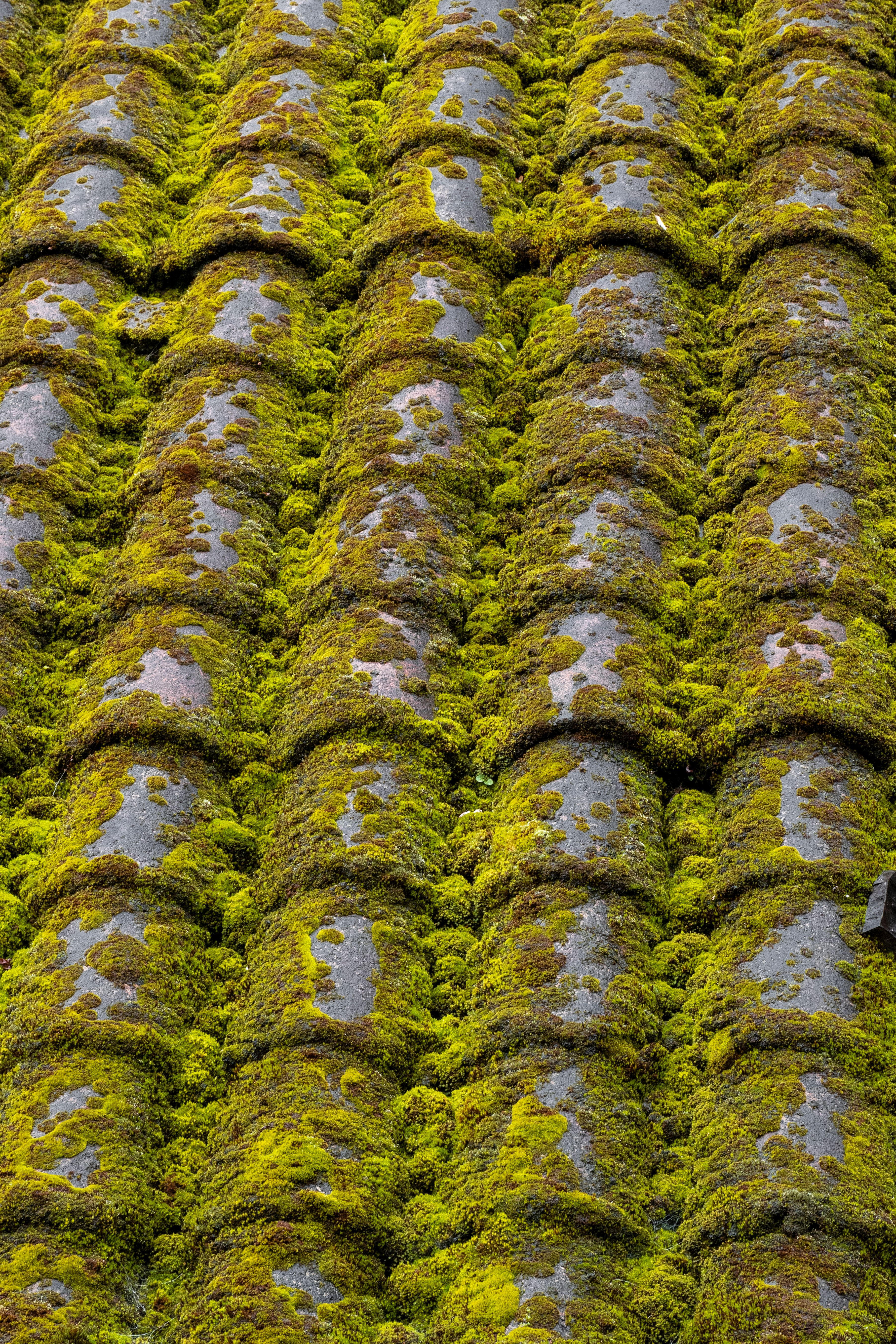
Roof moss appears as green, cushiony clumps growing along tile edges and in shaded valleys, usually worst on north-facing slopes and under overhanging trees where it stays damp.
A clear secondary sign is moss debris collecting in the gutters below, washed down by rain, which is often what prompts a closer look at the roof.
How serious is it?
Low to moderate: often cosmetic, but it blocks gutters and holds damp
On a roof in good condition, moss is largely cosmetic. The practical problem is that moss fragments wash into and block gutters and downpipes, which then overflow and can cause damp.
On older or already-damaged roofs, moss can hold moisture against tiles and lift in frost, accelerating wear. The growth itself rarely causes a sound roof to fail, so judge the roof condition, not just the moss.
How to fix it yourself
- Only work on a roof if you have safe access; otherwise treat it as a job for a professional. Most homeowners should not walk on a pitched roof.
- From a safe ladder or scaffold, gently scrape or brush moss downwards (towards the gutter) with a stiff brush, taking care not to lift or crack tiles.
- Apply a proprietary roof biocide or moss killer following the label, which kills remaining spores so regrowth is slower; this is often more effective than scraping alone.
- Clear the moss debris from the gutters afterwards so it does not cause blockages.
- Do not pressure wash the roof, as it can strip protective tile surfaces and drive water underneath.
When to call a professional
- The roof is steep, high, fragile, or you do not have safe access equipment.
- Tiles are cracked, slipped or already damaged, which is a roofing repair rather than a cleaning job.
Who to call
- A specialist roof-cleaning firm that uses soft-wash methods rather than high-pressure washing.
- A roofer for tile repair or replacement where moss has revealed underlying damage.
Frequently asked questions
Does moss damage a roof?
On a sound roof, moss is mostly cosmetic. The real issue is that it washes into gutters and blocks them, causing overflow and damp. On older or damaged roofs it can hold moisture against tiles and worsen frost damage, so the roof condition matters more than the moss alone.
Should I pressure wash moss off my roof?
It is generally a bad idea. High-pressure washing can strip the protective surface of tiles, crack them, and force water underneath into the roof structure. Careful manual removal followed by a biocide is the safer approach, ideally carried out by a roof-cleaning specialist using soft-wash methods.
How do I stop moss growing back on my roof?
After removing it, apply a roof biocide to kill remaining spores so regrowth slows. Reducing shade by trimming overhanging branches helps, as moss thrives in damp shade. Some roofs use copper or zinc strips near the ridge, which release ions that inhibit moss when rain washes over them.
Sources
Editor, HomesAndHedge
Oliver Mackman is the editor of HomesAndHedge and is accountable for its editorial standards and sourcing. He ensures every claim is backed by a named source such as the Property Care Association, the RHS, the NHS or gov.uk, and that the site is clear about when a job needs a qualified professional.
Last reviewed: 24 September 2026